

You want to know how long Mitopure takes to work before you commit to taking it every day. That makes sense.
You want clear results, not hype.

Most people need to take Mitopure daily for about 8 to 16 weeks to notice measurable changes in muscle strength and endurance, since it works gradually at the cellular level.
It doesn’t act like caffeine or a quick energy booster. Instead, it supports mitochondrial health over time by promoting mitophagy—basically, it helps your cells clear out damaged mitochondria.
Some people notice subtle shifts in daily energy within a few weeks. Clinical studies show more meaningful improvements in muscle strength and endurance after about four months of consistent use.
If you expect instant effects, you may feel disappointed. If you stay consistent, you give your body time to respond.
Key Takeaways
- Mitopure works gradually and requires daily use for several weeks.
- Clinical results show noticeable muscle benefits around 4 months.
- It supports cellular energy production rather than providing a quick boost.
Understanding Mitopure and Its Key Ingredient
Mitopure delivers a specific compound called urolithin A, which targets how your cells produce energy. Its effects really depend on dose, consistency, and how well your body makes or uses this compound.
What Is Mitopure?
Mitopure is a branded urolithin A supplement developed by Timeline Nutrition. It contains a highly purified form of urolithin A, a compound linked to mitochondrial health.
Mitochondria produce energy inside your cells. As you age, they tend to work less efficiently.
This decline can affect muscle strength, endurance, and recovery. Mitopure doesn’t act like a stimulant, so you won’t feel an instant boost.
It aims to support cellular function over time. You’ll find Mitopure in softgels, gummies, and powder.
Clinical discussions usually focus on daily doses between 500 mg and 1,000 mg, depending on the formula. Because it works at the cellular level, results depend on regular use, not just taking it occasionally.
The Role of Urolithin A
Urolithin A is a compound your body can form after you eat foods rich in ellagitannins. You’ll find those in foods like:
- Pomegranates
- Berries
- Walnuts
Urolithin A is often described as a postbiotic. That just means your gut bacteria create it from nutrients you eat.
Research suggests urolithin A supports a process called mitophagy. This helps your body recycle and renew mitochondria, which supports steady energy production and muscle function.
Not everyone produces meaningful amounts of urolithin A from food alone. That’s why some people go for a direct urolithin A supplement like Mitopure instead of relying only on diet.
How the Gut Microbiome Affects Urolithin A Production
Your gut microbiome plays a key role in natural urolithin A production. After you eat ellagitannin-rich foods, specific gut bacteria convert them into urolithin A.
But many people just don’t have the right mix of bacteria to make enough. Studies show a large portion of adults produce little or none at all.
This means two people can eat the same foods but get different results. If your microbiome doesn’t support this conversion, you won’t get much benefit from pomegranates or berries alone.
A supplement like Mitopure bypasses this step. It gives you urolithin A directly, no gut bacteria required.
How Mitopure Works at the Cellular Level

Mitopure delivers a purified form of Urolithin A, a compound that targets your mitochondria. It supports mitochondrial health by activating mitophagy and improving mitochondrial efficiency.
It also influences key biomarkers linked to cellular health and aging. Your mitochondria produce the energy your cells use every day.
As you age, mitochondrial function often declines. Damaged mitochondria build up, and your cells produce energy less efficiently.
Mitopure supplies Urolithin A, which researchers have studied in human clinical trials. In a 4‑month randomized trial in middle‑aged adults, people who took Urolithin A showed improvements in muscle strength and aerobic endurance.
Researchers also observed changes in mitochondrial biomarkers, including proteins linked to mitochondrial metabolism. You may also see shifts in blood markers tied to mitochondrial efficiency.
In the same study, participants had lower levels of certain plasma acylcarnitines and C‑reactive protein, a marker associated with chronic inflammation. These changes suggest improved mitochondrial health and reduced inflammatory stress at the cellular level.

Mechanism of Mitophagy
Mitophagy is your body’s process for clearing out damaged mitochondria. Think of it as targeted cellular recycling.
Urolithin A activates this process. It signals your cells to remove dysfunctional mitochondria and replace them with healthier ones.
This helps restore mitochondrial function. In clinical research, muscle biopsies showed increased levels of proteins related to mitophagy after supplementation.
This confirms that Urolithin A doesn’t just float around in your blood—it acts directly inside your cells. By improving mitochondrial turnover, you support better energy production.
Over time, this can affect how your muscles perform and how efficiently your cells generate energy.
Cellular Health and Longevity
Cellular health depends on how well your cells manage damage. Mitochondrial decline is a known feature of aging and plays a role in reduced muscle performance and metabolic changes.
By improving mitophagy and mitochondrial efficiency, Mitopure targets one pathway linked to longevity. Human studies show benefits in muscle strength and exercise performance after consistent use.
Researchers also report that supplementation at clinical doses appears safe and well tolerated over several months. When your mitochondria function better, your cells manage energy and stress more effectively.
Expected Timeline for Results with Mitopure
Mitopure works at the cellular level first, so changes start before you feel them. Clinical studies show measurable effects within weeks, while noticeable benefits often appear after several months of daily use.
Initial Cellular Changes
Once you start taking Timeline Mitopure each day, your body absorbs Urolithin A, the active compound. Clinical studies show that it supports mitophagy, a process that clears out damaged mitochondria.
This cleanup process can begin within the first few weeks. You won’t feel mitophagy happening, but lab tests in clinical trials have shown changes in markers tied to mitochondrial health.
In a placebo-controlled study funded by Timeline Nutrition, participants showed measurable shifts in muscle cell function and inflammation markers over time. These changes happened before most people reported physical differences.
Mitopure is designed to build up with daily use. That’s why the company and most clinical trials use consistent daily dosing, often 500 mg per day, for several months.
When to Expect Noticeable Benefits
Most people do not notice clear changes in the first few days. Mitopure is not a stimulant, so you shouldn’t expect an immediate energy boost.
In clinical studies lasting 16 weeks, participants showed improved muscle endurance compared to placebo. Some studies also reported gains in muscle strength and better metabolic markers over that period.
Based on this timeline, you may start to notice changes in energy, stamina, or recovery after about 8 to 16 weeks of steady use. Some users report subtle improvements earlier, but research points to the 3- to 4-month mark as a more reliable window.
Longer use may support continued benefits. Many Timeline Nutrition studies track outcomes over several months to assess sustained mitochondrial renewal.
Factors Influencing Response Time
Your response time depends on several personal factors. Age plays a role—mitochondrial function declines as you get older, so you may notice more visible changes if you start with lower baseline energy or muscle endurance.
Diet and gut health also matter. While Mitopure delivers Urolithin A directly, your overall nutrient intake still affects mitochondrial performance.
Dose and consistency are critical. Clinical trials typically use a set daily dose, often 500 mg. Skipping days may delay results.
Your activity level can also shape what you notice. If you exercise regularly, you may spot changes in endurance or recovery more clearly than someone who’s sedentary.
Placebo-controlled study designs show that not everyone responds at the same speed. Tracking your energy, strength, and recovery over 12 to 16 weeks gives you a realistic view of progress.
Clinical Evidence and Effectiveness
Human trials show that Mitopure (Urolithin A) can improve muscle strength, endurance, and key markers of mitochondrial health within a few months. Most benefits appear after consistent daily use for about 4 months.
Summary of Human Clinical Trials
Multiple randomized, double-blind, placebo-controlled clinical trials have tested Urolithin A in healthy adults.
One important study enrolled adults aged 40 to 64 with low fitness. Participants took 500 mg, 1,000 mg, or a placebo daily for 4 months.
Researchers measured muscle strength, exercise performance, blood markers, and muscle changes. Both doses were well tolerated, and side effects matched those of placebo.
Earlier research showed that 500 mg daily increases Urolithin A levels in the blood and impacts genes linked to mitochondrial function in muscle. A 6‑month trial also looked at strength and performance outcomes.
Most measurable changes showed up after 12 to 16 weeks of daily supplementation.
Muscle Strength and Endurance Improvements
In the 4‑month trial, leg muscle strength improved with Urolithin A.
Hamstring strength rose by about 10–12% in both dose groups, while the placebo group declined. Isokinetic dynamometer testing provided objective torque values.
Knee flexion strength also increased with supplementation. Aerobic endurance improved, too.
Participants saw gains in peak oxygen consumption (VO2 max) and walked farther in a 6‑minute walk test. Peak power output didn’t change much.
Lean body mass stayed the same, so strength gains likely came from better muscle function, not bigger muscles.
Athletic Performance and Recovery Outcomes
Most trials focus on middle-aged, untrained adults, not elite athletes.
Still, improvements in muscle endurance and mitochondrial function matter for athletic performance. Better mitochondria can support energy production during exercise.
Some research in older adults shows better muscle endurance after long-term use. The biological mechanism applies to active folks, even if direct data in athletes is limited.
Mitopure supports mitophagy, which helps your cells clear out damaged mitochondria. Healthier mitochondria can support better training and recovery.
Don’t expect instant boosts in speed or power. Evidence points to gradual improvements in muscle performance and endurance with steady, daily use.
Impact on Inflammation and Mitochondrial Biomarkers
Trials measured blood and muscle biomarkers linked to cellular health.
People taking Urolithin A showed reduced acylcarnitines in plasma, which suggests better mitochondrial efficiency. Lower C-reactive protein (CRP) levels, a marker of inflammation, also appeared.
Muscle biopsies showed higher expression of proteins related to mitophagy and mitochondrial metabolism. These changes line up with the supplement’s mechanism of action.
These biomarker shifts explain why strength and endurance improved without bigger muscles.
Forms, Dosage, and How to Take Mitopure
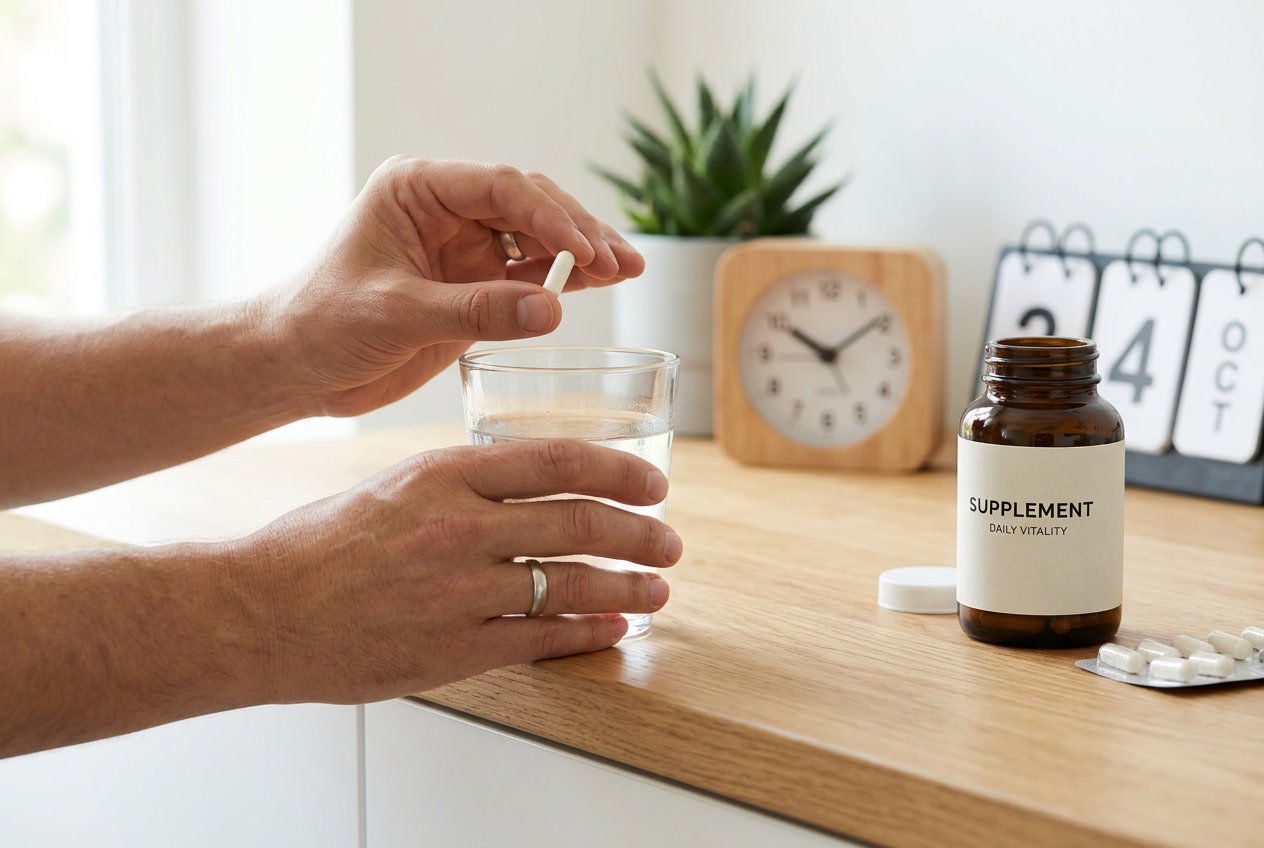
Mitopure comes in softgels, powder, and gummies. Each form delivers a set dose of Urolithin A, so you can pick what fits your routine as long as you stick to the daily dose.
Mitopure Softgels
Mitopure softgels offer a simple and precise way to take Urolithin A. Many people like this option for convenience.
Two softgels give you 500 mg of Mitopure. Four softgels provide 1,000 mg, which is the highest daily amount used in studies.
You can take softgels with or without food. Try to take them at the same time each day to keep it consistent.
Timeline Mitopure softgels are made under GMP and certifications like ISO 9001 and ISO 22716. The ingredient is also GRAS (Generally Recognized as Safe).
Mitopure Powder
Mitopure powder works well if you like mixing supplements into food. Each stick pack has 500 mg of Urolithin A.
Use one stick for 500 mg or two for 1,000 mg. It stirs best into yogurt, oatmeal, or a smoothie, not plain water.
The powder has a tart berry flavor and no added sugar. Mix it well to avoid clumps.
Timeline Nutrition makes the powder under GMP guidelines and holds certifications like ISO 9001 and ISO 22716.
Mitopure Gummies
Mitopure gummies give you a chewable option with a fixed dose. Two gummies provide 500 mg of Mitopure.
If you want 1,000 mg daily, take four gummies. You can eat them with or without food.
Lots of people prefer gummies for taste and ease. They’re often strawberry-flavored and don’t have artificial colors or flavors.
Like other Mitopure products, the gummies deliver a clinically studied dose. They’re usually made under GMP standards and are third-party tested for quality. Check for certifications like NSF Certified for Sport if that matters to you.
Recommended Dosage and Administration Tips
Most studies use 500 mg to 1,000 mg per day. Most adults start at 500 mg and may increase to 1,000 mg if their doctor suggests it.
Take Mitopure once daily. Consistency is more important than timing, since the effects build over time.
Stick with the same form or switch between forms, as long as you keep track of your total dose. For example:
- 2 softgels = 500 mg
- 1 powder stick = 500 mg
- 2 gummies = 500 mg
Don’t go over 1,000 mg per day unless your healthcare provider tells you to. If you take medications or have a medical condition, check with your doctor first.
Safety, Side Effects, and Considerations
Clinical trials show a strong safety profile for Mitopure at recommended doses. Most healthy adults tolerate it well, but you should consider your health, meds, and product quality before starting.
Clinical Safety Profile
Trials on Urolithin A, the main ingredient in Mitopure, show good tolerability at 500 mg and 1,000 mg per day.
Researchers found no significant difference in adverse events between those taking Mitopure and those on placebo. No serious side effects turned up in healthy adults.
Company safety reviews say adults over 18 haven’t reported Mitopure-related adverse events when used as directed. Preclinical studies didn’t show major concerns at recommended levels.
Mitopure is sold as a dietary supplement. The FDA doesn’t approve supplements like it does drugs, but supplement ingredients may qualify as GRAS (Generally Recognized as Safe).
Stick to labeled dosing and don’t take more than directed.
Potential Side Effects
Most users don’t report clear side effects in studies, but no supplement is totally risk-free.
Some online reviews mention mild issues like:
- Headache
- Digestive discomfort
- Temporary fatigue
- Increased feelings of inflammation
One reviewer blamed sunflower lecithin in some softgels for symptoms. If you’re sensitive to soy or sunflower, check the label.
Since Mitopure affects mitochondria and cell metabolism, you might notice changes in energy during the first few weeks. If you feel unwell, stop and talk to your doctor.
Long-term safety data beyond trial periods are still limited, which is pretty normal for newer supplements.
Interactions and Special Populations
Mitopure targets mitochondrial health, which matters for muscle, metabolism, and cardiovascular function. If you take prescription meds, check with your doctor about possible interactions.
Use caution if you take:
- Statins
- Diabetes meds
- Blood pressure drugs
- Anti-inflammatory meds
No strong evidence shows harmful interactions, but formal studies are limited.
If you’re pregnant, breastfeeding, under 18, or have chronic illness, don’t start Mitopure without medical advice. Trials mostly involve healthy middle-aged adults, not high-risk groups.
If you have liver or kidney disease, ask your provider first. These organs process supplements, and safety data is limited.
Regulatory and Quality Certifications
Mitopure is a dietary supplement, not a prescription drug. The FDA regulates it under supplement rules, not drug standards.
Quality depends on the brand. Look for products that follow:
- GMP (Good Manufacturing Practices)
- ISO 9001 quality management
- ISO 22716 cosmetic GMP (for topical forms)
- Third-party testing
Some brands get NSF Certified for Sport to screen for banned substances. If you’re a competitive athlete, check for this certification.
Third-party testing confirms purity and label accuracy. Always check lot numbers and expiration dates.
Comparisons, Reviews, and Additional Benefits
Mitopure contains a purified form of urolithin A developed by Amazentis. You could, in theory, get urolithin A from food, but the dose and absorption aren’t reliable.
Mitopure vs. Natural Food Sources
Your body can make urolithin A after you eat foods packed with ellagic acid. Think pomegranate juice, walnuts, and berries. Gut bacteria handle the conversion from ellagic acid to urolithin A, but honestly, it's not a sure thing.
Studies show lots of people barely make any urolithin A from food. It really comes down to your gut microbiome, and everyone's is different.
Mitopure gives you a direct, reliable dose of urolithin A. You skip the whole gut conversion gamble. This is a big deal if you're after steady support for mitochondrial function and cellular energy.
Pomegranate juice? Sure, it's healthy, but it won't guarantee better mitochondria. Mitopure goes straight for mitochondrial dysfunction and tries to fix it at the source.
People also stack it up against other supplements:
- NMN and NR for NAD+ support
- CoQ10 for mitochondrial energy
NMN and NR target NAD+ levels. Mitopure takes a different route—it helps your cells recycle worn-out mitochondria, a process called mitophagy.
These are separate pathways, but both connect to energy and how your cells work.
Mitopure usually costs more than CoQ10 or pomegranate extract. That's because it uses a patented ingredient, so you're paying for something unique.
Real-World Experiences and Reviews
Plenty of Mitopure reviews mention extra energy, better endurance, and easier recovery after a few weeks. Some folks say their muscle fatigue drops off during workouts.
Clinical trials back this up—urolithin A can improve muscle function and sometimes peak VO2. But don't expect changes overnight. Most effects show up after 4 to 8 weeks.
Here's what pops up a lot in Mitopure reviews:
- Slow, steady improvement (not a caffeine jolt)
- Faster recovery between workouts
- Small but real boosts in stamina
Some people don't notice much. Results seem to depend on things like age, fitness level, and how your mitochondria are doing in the first place.
If you're reading reviews, pay attention to the timeline. Most meaningful changes need at least a month of daily use.
Additional Health Benefits Beyond Mitochondria
Mitopure mainly targets mitochondria. But researchers are also curious about other effects, not just energy production.
For instance, you’ll find topical urolithin A in some skin care products. Early data hints it could support collagen and maybe soften signs of skin aging—wrinkles, dryness, the usual suspects.
People have also looked at oral urolithin A for a few things:
- Muscle strength in midlife and older adults
- Recovery after exercise
- Cellular health as we get older
All this ties back to keeping mitochondria in better shape. When mitochondria work well, muscles tend to perform better and hang on to function as we age.
Still, research is ongoing and results are mixed. Mitopure works best as a targeted cellular support supplement—not a swap for exercise, sleep, or real food.